
Cost modeling before the decision
What an assignment actually costs, allowances, tax gross-up, housing, shipping, before anyone commits. Modeled by scenario so finance can compare options rather than approve a single number.
Global mobility
Global mobility software, also called expatriate management software, manages international assignments and relocations along with the tax, payroll and immigration obligations they create. It replaces spreadsheets and email chains with cost modeling, structured workflows and a record of every decision.Most platforms in this category handle the logistics of moving people. Fewer handle what those moves cost you and what they oblige you to do.
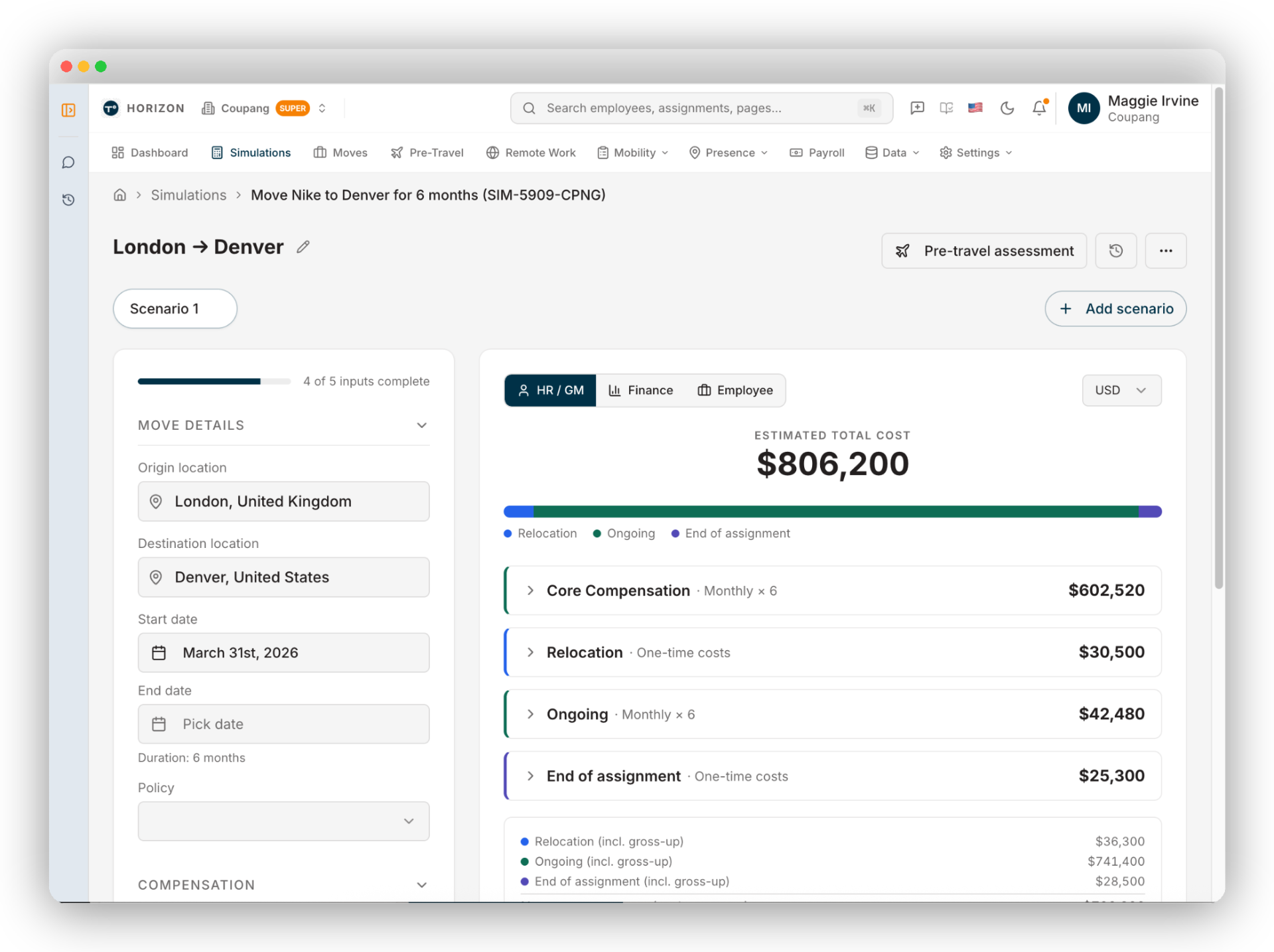
What an assignment actually costs, allowances, tax gross-up, housing, shipping, before anyone commits. Modeled by scenario so finance can compare options rather than approve a single number.
Where income tax and social security are owed once someone moves, which treaties apply, and what the employer is responsible for. This is the half of the category most platforms treat as an afterthought.
Visas, work permits, permitted activities and expiry dates. Checked before travel rather than discovered at a border.
Assignment letters, cost estimates, policy acknowledgments, all generated from the same data and retained with the decisions they support.
Most mobility programs run on spreadsheets that are out of date the day they are built. Costs are estimated once and never revisited. Tax positions are checked after the fact. 69% of mobility teams want AI-powered scenario modeling. (Source: AI Inflection Point report) The demand is for better modeling, not more administration.
Manual
ManualWith software
SoftwareThe category splits between platforms that move people and platforms that manage what moving them obliges you to do. These six questions separate them.
Can you model several scenarios before committing, or only produce one estimate after the decision?
Does the platform surface the obligations a move creates, or leave that to your adviser?
Are permits, permitted activities and expiry dates tracked in the same system as the assignment?
Are your policy rules applied by the system, or interpreted by whoever handles the case?
Are assignment letters and cost estimates generated from live data, or written by hand?
Does the country coverage match your footprint, and does it read from the HR and payroll systems you already run?
Build cost scenarios for the assignment before anyone commits. Compare locations, durations and policy options side by side.
Route the case through your policy rules. Reviewers see cost, tax exposure and immigration requirements together rather than in three separate threads.
Generate the documents, initiate the vendors, and track the move against the plan that was approved.
Monitor the assignment through its life. Track permit expiry, duration limits and cost variance, and keep the record for as long as the tax authority might ask.
Compare several versions of an assignment in minutes rather than rebuilding a spreadsheet for each one.
Tax, social security and immigration requirements appear while the decision can still change.
The same rules produce the same answer for every assignee, regardless of who handles the case.
Estimates, approvals, documents and decisions retained together, with attribution and dates.
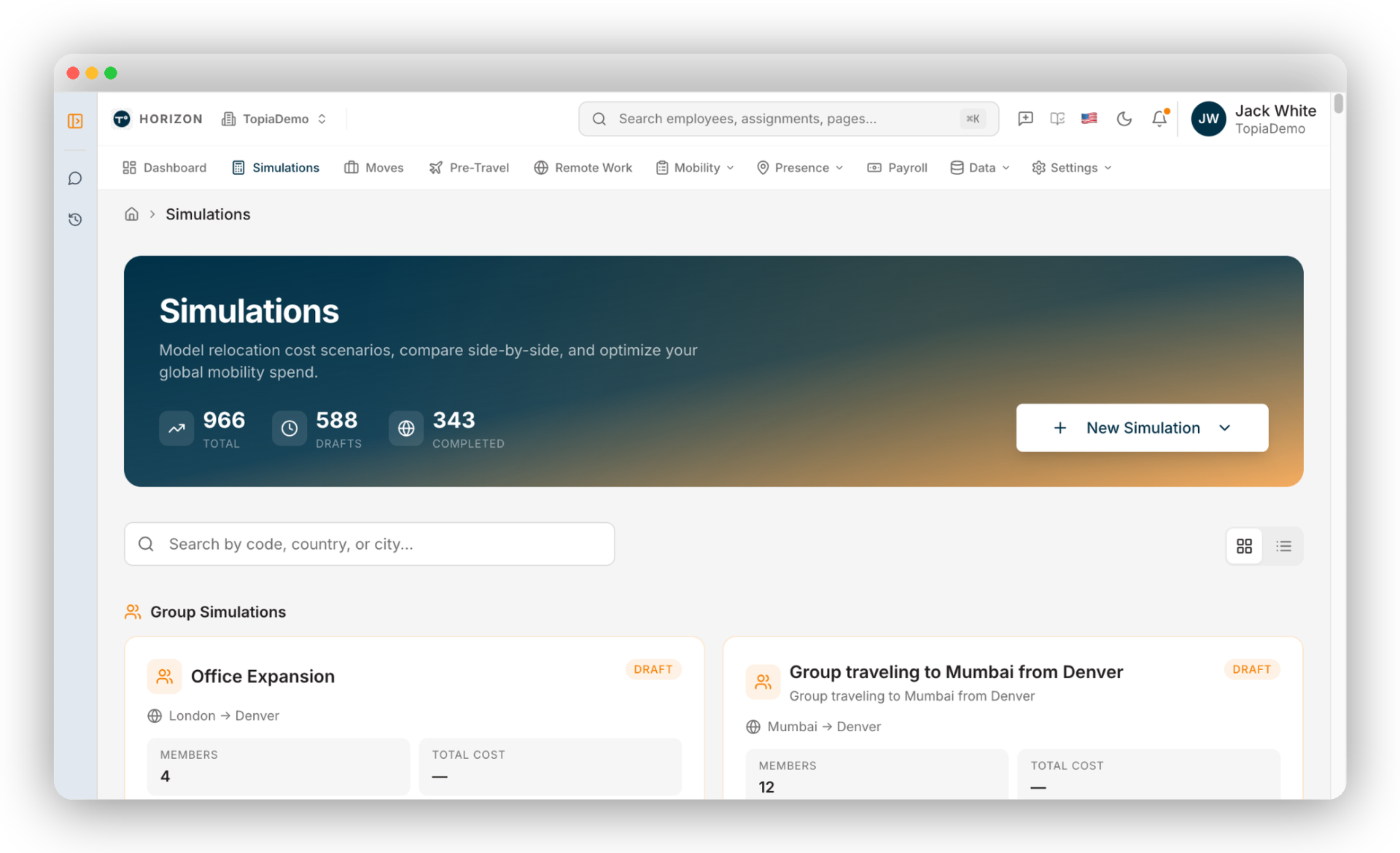
Permanent moves and long-term assignments, cost modeling, document generation
Cross-border trips, day counting, pre-travel risk checks
Work-from-anywhere requests, hybrid arrangements, distributed teams
Right to work, permits, permitted activities, expiry tracking
Mobility
Run more assignments without adding headcount. Stop rebuilding the same spreadsheet.
Finance
See what an assignment costs before it is approved, and compare options rather than approving a single figure.
Risk and compliance
Know which obligations each move creates, and hold a record that stands up to an audit.
HR
Give employees a consistent experience and a predictable answer, wherever they are going.
Horizon manages assignments, relocations, travel and remote work as one system rather than four.
Software that manages international assignments and relocations along with the obligations they create. It typically covers cost modeling, policy and approval workflows, immigration tracking, document generation and a record of decisions.
Yes. Expatriate management software, global mobility software and assignment management software describe the same category. Vendors differ mainly in whether they emphasize moving people or managing the compliance that follows them.
Relocation management focuses on the logistics of the move: shipping, temporary housing, vendor coordination. Global mobility software covers those logistics and adds cost modeling, tax and social security obligations, immigration, and the audit record. If your concern is tax and compliance rather than moving boxes, that is the distinction to test vendors on.
An EOR employs people on your behalf in countries where you have no legal entity. Global mobility software does not employ anyone. It models what a move costs, applies your policy, tracks the obligations created, and keeps the record. Companies often use both.
Usually when the number of assignees exceeds what one person can hold in their head, when finance starts asking for scenario comparisons rather than single estimates, or after the first compliance surprise. The trigger is rarely headcount alone.
It should. Permits, permitted activities and expiry dates belong in the same system as the assignment, because an immigration problem is usually discovered at a border rather than in a report.
Book a 30-minute demo. We will model a real scenario with you and show what the obligations look like before you commit.