
A three-day client visit looks harmless. So does a month of work from a spare room in another state. But the obligations start the day the work does, and most teams find out months later.
Where the risk hides
Every trip and remote work request touches the same four areas: tax and payroll, permanent establishment, social security, and immigration. The core problem is visibility. 84% of mobility teams lack visibility into employee work locations (AI Inflection Point report).
State and city rules catch teams off guard
California prorates wages by working days. Six of ten workdays in California means six-tenths of that pay is in scope. New York's 14-day rule relieves employers of withholding only when all four of its conditions hold. Cities add their own layer. In San Francisco, work on any seven days in a tax year can trigger registration, and days worked by different people add up. Seattle lets employers count by hours or by where an employee is primarily assigned, and the choice matters.
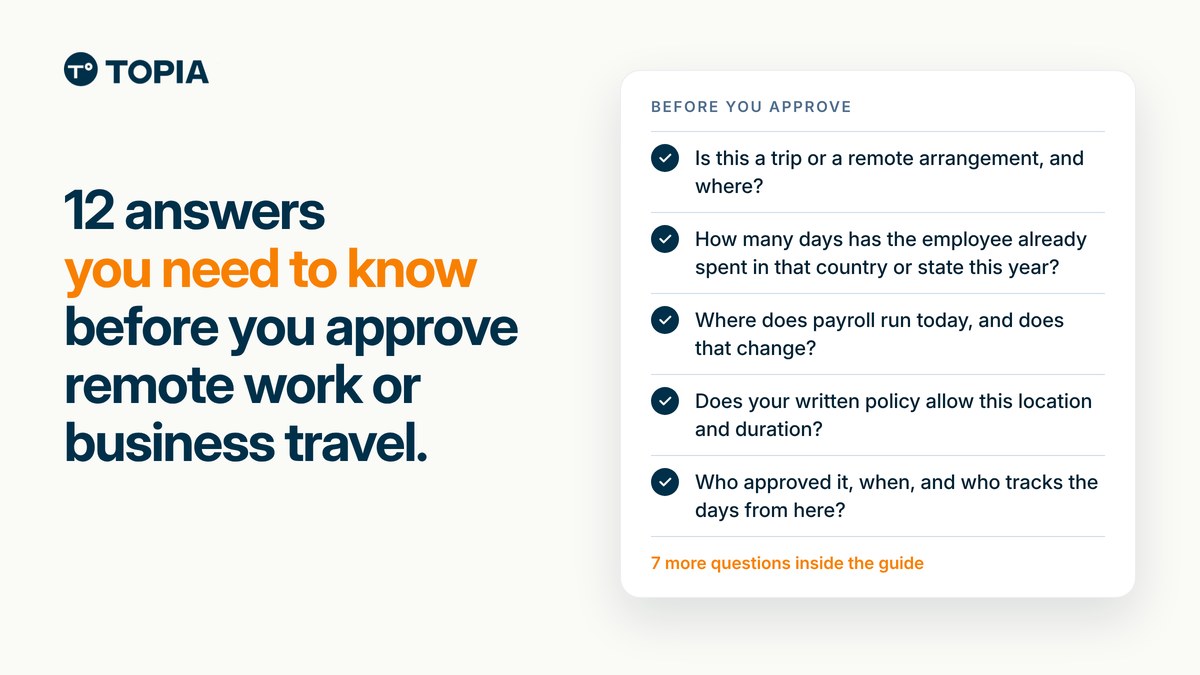
Questions to answer before you approve
- Is this a trip or a remote arrangement, and where?
- How many days has the employee already spent in that state or country this year?
- Where does payroll run today, and does that change?
- Does your written policy allow this location and duration?
- Who approved it, when, and who tracks the days from here?
Get the full checklist
The business travel and remote work compliance guide covers all four risk areas, the California, New York, San Francisco, and Seattle rules, and a 12-question checklist with a four-step process you can repeat.
This post is general information, not legal or tax advice. Confirm requirements with qualified advisers.